
.NET History — From Framework to One .NET
Introduction: Why Knowing the History Is Practical This episode answers three questions. Why was “.NET 4” skipped? — Why does the version after .NET Core 3.1 jump to 5 instead of 4? Why wa...

Introduction: Why Knowing the History Is Practical This episode answers three questions. Why was “.NET 4” skipped? — Why does the version after .NET Core 3.1 jump to 5 instead of 4? Why wa...

Introduction: The Question of “Who, and How Much” The previous post showed what processes and threads are and how the OS abstracts them. A natural follow-up question arises. If 100 threads a...

Introduction: The ambiguity behind “.NET” In developer documentation, resumes, and blog posts, the word “.NET” is used with a surprisingly wide range of meanings. “I build backends with .NET...

Introduction: From the Map to the Body The previous post surveyed the lineage and skeleton of the three operating systems: Linux monolithic, Windows NT hybrid, macOS XNU a Mach + BSD dual struct...

Introduction: Why Start with the OS Stage 1 covered data structures and memory. Arrays and linked lists, hash tables, trees and graphs, and heaps — all of these were stories of “how to organize ...

Introduction This article is a bonus installment of the CS Roadmap series. In Part 5 on Graphs, when we covered Dijkstra and A, we left one sentence hanging: *“Using a priority queue (binar...

Introduction “Mythos is insane fr it’s literally a Blackwall AI” I got this message from a friend, and had to look into what they were talking about. On April 7, 2026, Anthropic released the...

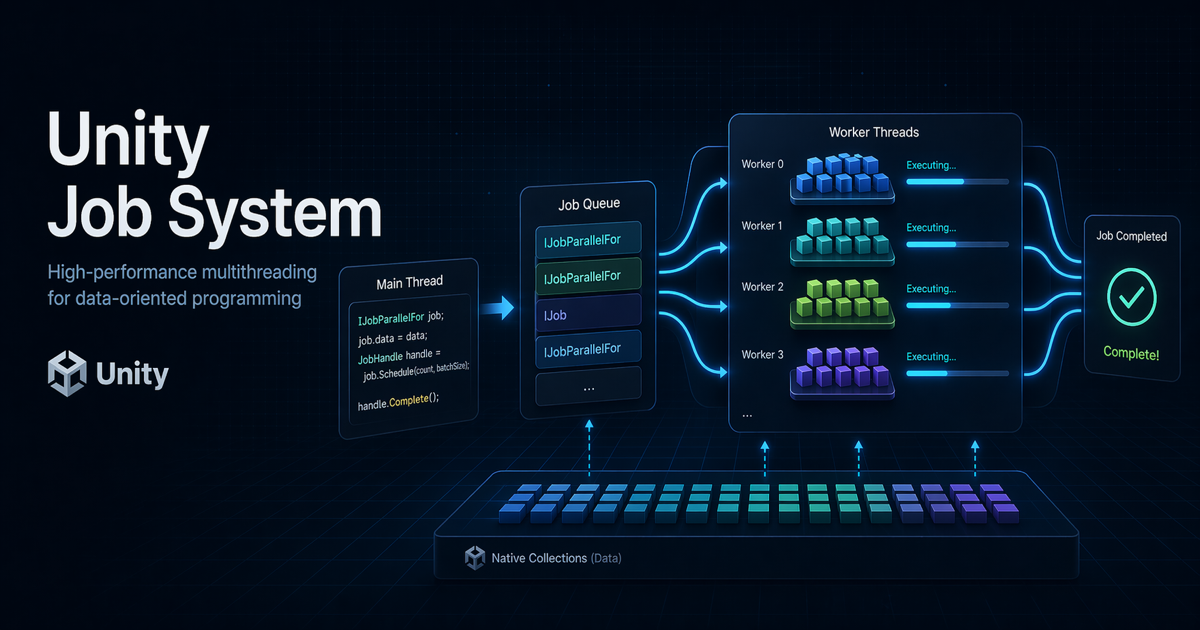
Introduction In the previous post, we covered the concept of Flow Field pathfinding and its three-stage pipeline. Since a Flow Field is computed in \(O(V)\) regardless of the number of agents, pat...

Introduction At the end of the previous post, we previewed this: The real reason to use NativeContainers — the impact of GC on games Throughout this series, we’ve repeatedly encountered the ...

Introduction In the Job System post, we dissected the internal structure of NativeArray. We covered the memory model differences from C# arrays, Allocator types, and the basics of how the Safety S...